
How to Launch an IPO in India? Eligibility, Costs, Process and Timeline
Every founder who dreams of ringing the bell at NSE or BSE asks the same two questions: can my company list, and what will it actually take? The IPO process in India is rigorous, but it is also predictable. If you clear the IPO eligibility tests, budget realistically, and give yourself 12 months of runway, listing is a project you can plan, not a gamble you hope for.
"A successful IPO is decided 18 months before the bell rings, in the quality of your financials, governance, and story."
Step 1: IPO Eligibility, Can Your Company List?
IPO eligibility in India is set by the SEBI (ICDR) Regulations, 2018, plus the listing criteria of the exchange. The route depends on where you list.
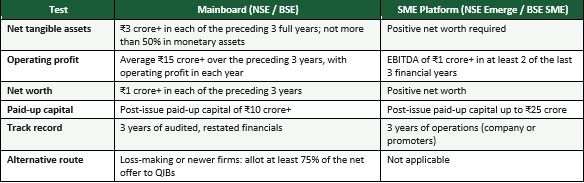
• Structure: Only a public limited company can list. A private limited company must first convert and put its shares in demat form.
• Clean promoters and directors: Not debarred by SEBI, not wilful defaulters, not fugitive economic offenders.
• Promoter contribution and lock-in: Promoters must hold a minimum share of post-issue capital, locked in for a prescribed period. Minimum public shareholding of 25% applies, with relaxed thresholds for very large issuers.
ICDR and exchange criteria are amended often (most recently in March 2026). Confirm current thresholds with your merchant banker before filing.
Step 2: The IPO Process in India, Stage by Stage
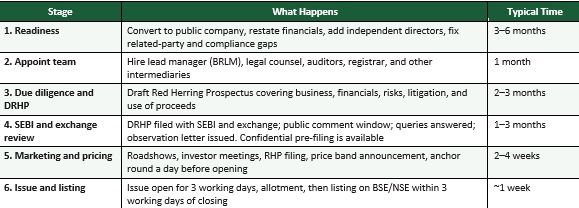
Overall, plan on 6 to 12 months from first preparation to listing. The SEBI observation letter stays valid for 12 months, so the issue must open within that window. SME issues usually move faster than mainboard.
Step 3: What an IPO Really Costs
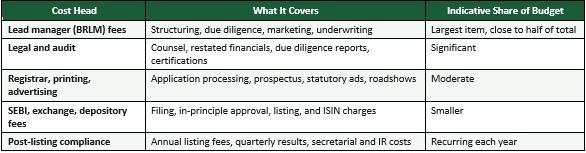
Indicative market ranges: total issue expenses are typically a mid-single-digit percentage of issue size for mid-sized mainboard IPOs and a much smaller percentage for mega issues. SME IPOs have a smaller absolute budget. Costs on fresh issues are borne by the company; on an OFS, by the selling shareholders. Always get firm quotes.
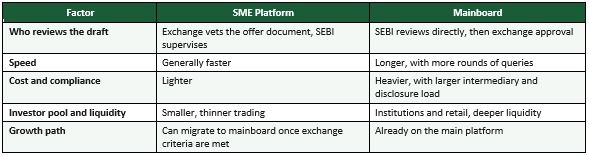
SME or Mainboard? Choosing Your Platform
IPO Readiness Checklist: 12 Months Before Filing
• Financials: 3 years of audited, restated numbers with clean margins, no unexplained spikes, and tight working-capital discipline.
• Governance: Public company status, independent directors, audit committee, and documented policies.
• Promoter housekeeping: Clear shareholding, resolved litigation, limited pledges, and minimal related-party flow.
• Equity story: A clear use of proceeds, a credible growth plan, and a valuation you can defend against listed peers.
• Team: Shortlist lead managers early and compare track record, sector expertise, and fee structure.
Common Mistakes That Delay Listing
• Starting too late. Clean-up of financials and governance cannot be rushed in the last quarter.
• Messy related-party dealings. SEBI and investors scrutinise promoter-linked transactions heavily.
• Choosing the wrong platform. A company near the SME thresholds may do better listing there and migrating to the mainboard later.
• Ignoring the post-listing burden. Quarterly disclosures, governance, and investor expectations begin the day you list.
Launching an IPO is less about clearing a single hurdle and more about running a disciplined 12-month project. Companies that treat IPO eligibility and the IPO process in India as a business-wide upgrade, not just a fundraising event, come out stronger, whether or not the market is kind on listing day.
Disclaimer: For informational purposes only. Not legal, financial, or investment advice. Regulatory criteria and costs change; consult a SEBI-registered merchant banker and legal counsel before planning an IPO.
Planning to Go Public? Talk to We Grow Wealth
IPO readiness assessment, SME and mainboard IPO advisory, pre-IPO fundraising, and merchant banker coordination for promoters of growing companies.
+91 8750563151 | www.wegrowwealth.in | info@wegrowwealth.in