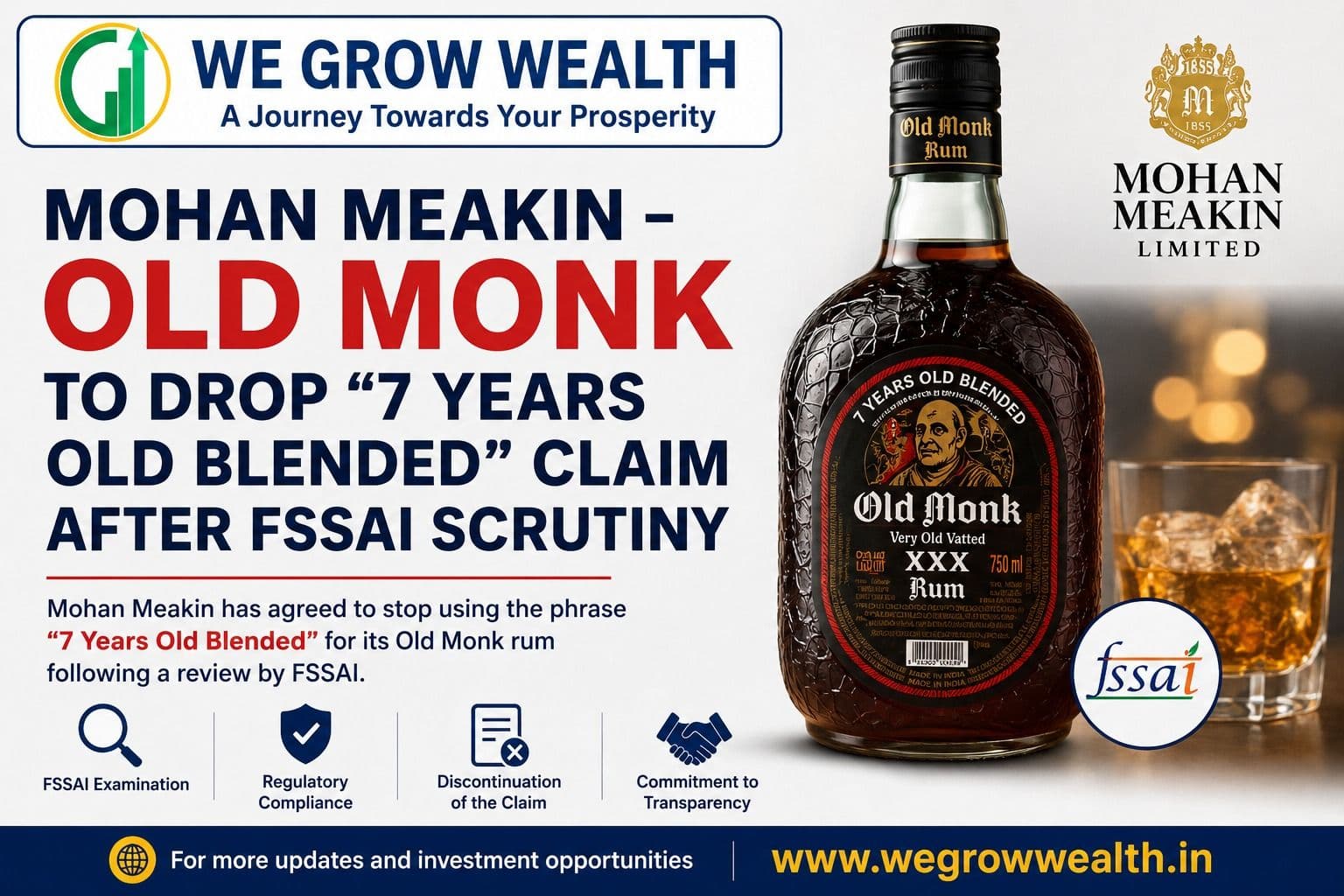
FLASH NEWS: Old Monk Maker to Drop "7 Years Old Blended" Claim Following FSSAI & High Court Scrutiny
Old Monk, one of India's most iconic rum brands, is facing a significant packaging and regulatory development after scrutiny from the Food Safety and Standards Authority of India (FSSAI) and proceedings before the Bombay High Court.
Mohan Meakin, through its distributor Mohan Rocky Springwater, has agreed to remove the long-standing “7 years old blended” and “very old vatted” descriptors from Old Monk rum packaging. The company has also agreed to make disclosures regarding “added flavour” more prominent on future bottles.
The development has attracted attention because Old Monk is one of the most recognisable alcoholic beverage brands in India, and the case raises broader questions around product labelling, consumer disclosures, transparency and regulatory compliance.
What Happened?
The matter came under scrutiny after the Food Safety and Standards Authority of India (FSSAI) raised objections regarding the composition of Old Monk rum and the way certain claims were presented on its packaging.
During the proceedings before the Bombay High Court, concerns were raised about whether the phrases “7 years old blended” and “very old vatted” could create an impression among consumers that the product had been matured in a manner suggested by the wording on the bottle.
Following the regulatory scrutiny and court proceedings, Mohan Meakin agreed to revise the packaging. The company will remove the disputed age-related descriptors and provide more prominent information regarding added flavour on future bottles.
The case has become an important example of how traditional brand positioning and packaging claims can come under greater scrutiny when regulators and courts examine whether consumers are receiving sufficiently clear information.
Key Highlights of the Dispute
FSSAI Allegations
The Food Safety and Standards Authority of India (FSSAI) raised concerns regarding Old Monk's composition and the claims made on its packaging.
According to the allegations raised in the dispute, matured rum spirit accounts for less than 5% of the blend, while the majority of the product consists of neutral, unmatured spirits mixed with artificial flavourings.
FSSAI argued that this composition could make the “7 years old blended” description potentially misleading, particularly if consumers interpreted the claim as meaning that the rum itself had been matured for seven years.
The regulator's concern was therefore focused on whether the packaging accurately communicated the nature, composition and maturation process of the product.
High Court’s Stance
The matter was also heard by a division bench of the Bombay High Court comprising Acting Chief Justice Ravindra V. Ghuge and Justice Gautam Ankhad.
The court refused to grant interim relief that would have stayed FSSAI's stop-sale prohibition in Maharashtra. As a result, the regulatory restriction remained in place while the matter continued.
The court proceedings focused heavily on consumer understanding, product labelling and whether the wording on the packaging could potentially lead to confusion about the actual nature of the product.
“7 Years Means 7 Years”
One of the key observations during the hearing concerned the interpretation of the phrase “7 years old.”
The court questioned whether the claim could reasonably be understood by consumers as indicating that the product had been aged for seven years. The bench also emphasised that disclosures presented in fine print may not be sufficient if the main packaging claim creates a different impression.
The court further examined the visibility of disclosures relating to added flavours. During the proceedings, concerns were raised that such information was difficult for an ordinary consumer to read.
This became a central issue in the dispute, highlighting the importance of ensuring that important product disclosures are clearly visible and understandable.
Company’s Defense
The company's defence was that FSSAI regulations permit the use of approved flavouring additives in neutral spirits and that the relevant ingredients were disclosed on the packaging.
The defence counsel also argued that Old Monk was being “selectively targeted”, claiming that other competitors may use similar processes.
The company maintained that the use of approved ingredients and flavouring additives was permitted under applicable regulations. However, the dispute continued to focus on whether the packaging language and the visibility of disclosures gave consumers a sufficiently clear understanding of the product.
What Lies Ahead?
Maharashtra Sales Restriction
For now, the sales restriction on Old Monk in Maharashtra remains an important part of the case.
The Bombay High Court did not grant interim relief against FSSAI's stop-sale prohibition, meaning the matter remains subject to further legal and regulatory proceedings.
The eventual outcome will be closely watched, particularly because Old Monk is a well-established consumer brand with a significant market presence.
Redesigned Packaging
As part of the developments before the court, Mohan Meakin has agreed to revise Old Monk's packaging.
The company is expected to remove the “7 years old blended” and “very old vatted” descriptors. It will also make the disclosure regarding added flavour more prominent on future bottles.
A fresh, digitally printed label layout is expected to be submitted to the court for judicial review.
The redesigned packaging will therefore be a key factor in determining whether the revised label addresses the concerns raised by regulators and the court.
Next Catalyst
The Bombay High Court is scheduled to hear the matter again on September 3, 2026.
The next hearing will be important because the revised label design is expected to be examined as part of the ongoing proceedings.
The key issue will be whether the updated packaging and disclosures satisfy the concerns raised regarding consumer clarity, product composition and labelling.
The outcome could determine whether Old Monk is able to return to Maharashtra shelves under the revised packaging framework.
Why This Development Matters
The Old Monk case goes beyond one brand or one product. It highlights the growing importance of transparent product labelling, clear consumer disclosures and regulatory compliance.
For established consumer brands, long-standing marketing claims and packaging language can face renewed scrutiny when regulators question whether those claims accurately communicate the characteristics of a product.
The case also demonstrates that disclosures printed in small or difficult-to-read text may attract attention when courts and regulators believe that consumers may not easily understand important information.
For businesses, consumers and market observers, the development serves as a reminder that branding, labelling and regulatory compliance must remain closely aligned.
The final outcome of the case and the court's assessment of Old Monk's redesigned packaging will remain important developments to watch.
Stay updated with the latest business news, corporate developments, IPO updates and market stories through We Grow Wealth.
Disclaimer: This article is published for informational and educational purposes only. It does not constitute investment, legal or regulatory advice. The matter remains subject to ongoing legal and regulatory proceedings, and readers should follow official announcements and regulatory updates for further developments.