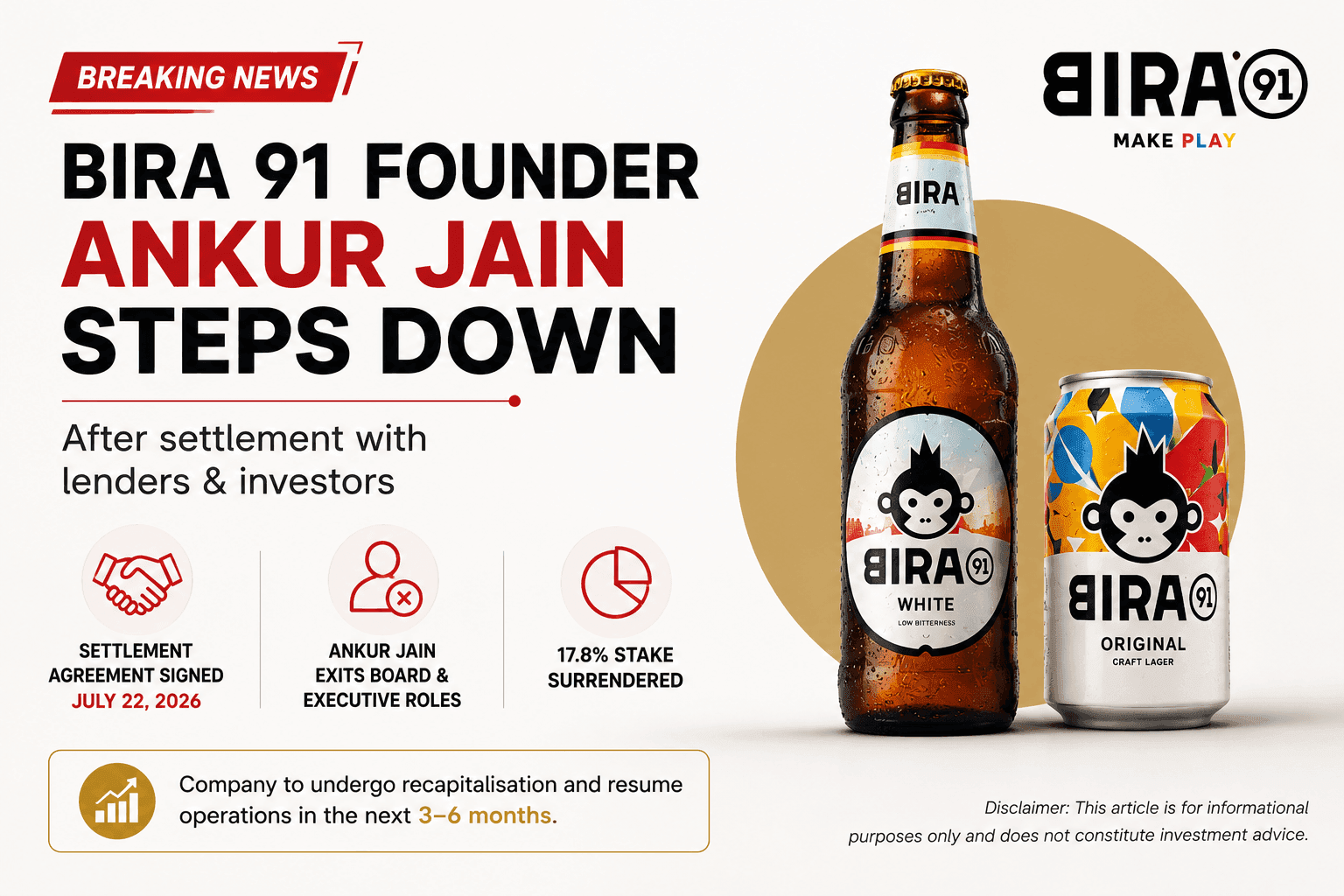
Bira 91 Founder Ankur Jain Steps Down After Settlement With Lenders & Investors
Ankur Jain, the founder of craft beer brand Bira 91, has officially stepped down from the board of parent company B9 Beverages and relinquished all executive roles, following a settlement agreement signed with the company's institutional investors and lenders on July 22, 2026.
As part of the settlement, Jain and his family have surrendered their entire 17.8% stake in the company. In return, Jain will be released from personal liabilities, including loans he had personally guaranteed, and both sides have agreed to withdraw all pending legal proceedings against each other.
A two-year crisis comes to a close
The agreement marks the end of a nearly two-year-long dispute between the company's founder and its financial stakeholders. In a letter to employees accessed by media outlets, Jain acknowledged the prolonged nature of the negotiations. He noted that the settlement involved nearly 30 stakeholders with "genuinely different, often competing interests," which is why it took far longer than anticipated.
Jain struck a reflective tone, apologising to employees for delayed dues and acknowledging that Bira 91 had survived several near-collapse moments through repeated fundraising. However, a failure to secure fresh capital over the past year and a half ultimately made his position untenable.
What went wrong at B9 Beverages?
The crisis at Bira 91 was multi-layered:
B9 Beverages changed its legal name from "B9 Beverages Private Limited" to "B9 Beverages Limited" in 2024 ahead of a planned IPO. This required re-registration of products with state excise authorities across India, causing 4–7 months of business disruptions and an estimated ₹80 crore in inventory write-offs — a self-inflicted wound that choked revenue at the worst possible time.
Debt swelled to approximately ₹1,000 crore, and production came to a halt. B9 Beverages reported a net loss of ₹748.8 crore on operating revenue of just ₹638.5 crore in FY24 — meaning the company was losing more money than it was earning. Sales volumes had declined from approximately 9 million cases in FY23 to 6–7 million cases in FY24.
By mid-2025, production had been halted entirely. Over 250 employees petitioned the board and major investors seeking a change in leadership, alleging serious lapses in corporate governance and nearly ₹50 crore in pending salaries. The company also faced proceedings before the NCLT as financial pressures mounted.
Most recently, glass manufacturer Hindusthan National Glass & Industries served B9 Beverages a legal notice over unpaid dues and uncollected inventory — alleging the company had failed to collect over 51 lakh customised bottles.
The investor landscape
B9 Beverages had attracted significant institutional backing over the years, including from Peak XV Partners (14.6%), Japan's Kirin Holdings (20.1%), and Sofina, with debt from Anicut Capital and the family office of Hero Corporate Services. Kirin had already written down the value of its debt and equity holdings and had been exploring an exit since late 2025.
A planned ₹500 crore debt infusion from BlackRock also reportedly fell through, further constraining the company's options.
What happens next?
The company will now undergo an out-of-court recapitalisation involving existing investors, with plans to resume operations within the next three to six months. The settlement effectively clears the path for fresh capital by removing the founder-lender dispute that had paralysed decision-making.
Jain, in his farewell note, acknowledged that the brand now needs a fresh start without the baggage of recent years. "Bira 91 needs fresh capital, a clear balance sheet, and a management team that can build the next phase without the weight of everything that came before," he said.
The bigger picture
Bira 91's trajectory is a cautionary tale for India's consumer startup ecosystem. The brand achieved something rare — genuine consumer love and cultural relevance in a category dominated by legacy players. But aggressive expansion into four owned breweries, high fixed costs, a botched corporate restructuring, and an inability to raise capital at the right time turned a promising story into a crisis. The sentiment is clearly visible in its unlisted share price, which has crashed nearly 70% over three years.
Whether the brand can stage a comeback under new management and fresh capital remains to be seen. The Indian craft beer market continues to grow, but Bira 91 will now have to rebuild trust with employees, vendors, distributors, and consumers — all at once.
Disclaimer: This article is for informational purposes only and does not constitute investment advice.